Rainwater Harvesting Systems and Flood Water Management in Rural Areas: A Systematic Review
Peer-reviewed article, which will be published in the June issue of VTEI – Belkaf_VTEI_3_2026_eng
The paper analyses the development of historical water reservoirs (splash dams) in the Low Tatras region based on the interpretation of maps from the mid-19th century to the present. In the past, splash dams served as part of the system for floating timber down the Hron and Váh rivers. They represented a key hydro-technical element that significantly influenced the hydrological regime of rivers and the formation of the mountain landscape. The identification of historical splash dams was based on the analysis of maps of the 2nd Military Mapping (1836–1852), which were compared with current map data (ZBGIS, Orthophotomap of the Slovak Republic) and verified by field research.
The SCS–CN method is one of the most widely used hydrological methods in the Czech Republic for estimating direct runoff from precipitation events in small catchments. Its practical application is sensitive to the quality and consistency of input data, in particular land use (LU), soil char-acteristics defined by the hydrological soil group (HSG), and appropriately specified design rainfall. The tool, designed to utilise open data in the Czech Republic as a plug-in for the QGIS GIS platform, automates the preparation of input data and the subsequent SCS–CN analysis. Land use is derived from ZABAGED data in combination with LPIS data. HSG and design rainfall are obtained via download services provided at rain.fsv.cvut.cz.
This article presents landscape changes in the upper part of the Výrovka river basin using a comparison of historical and current maps and or-thophotomaps, including verification of the current state of the landscape. On the map of the 2nd Military Mapping, 22 water bodies (ponds) with a total area of 57.53 ha were mapped. On the current map, 71 water bodies with a total area of 42.48 ha were recorded. Furthermore, significant changes in the location of watercourses were recorded; they were deepened, straightened, and their floodplains were drained. It is clear from the comparison of the map documents that these changes mainly occurred due to the intensification of agricultural use of the landscape.
Life by the Sázava river, an enthusiasm for “living sticks” and the microworld of aquatic organisms; twenty years devoted to science, followed by a turning point: T. G. Masaryk Water Research Institute during the transformative 1990s, and subsequently the Ministry of Agriculture. In this interview, RNDr. Pavel Punčochář, CSc. recalls the people who shaped him, the moments when the very existence of our institution was at stake, and explains, why the public will have to learn to trust predictions and effective water management solutions.
The Ore Mountains triangle formed by the towns of Abertamy, Boží Dar, and Horní Blatná is not only a tourist and skiing paradise, but also part of the Erzgebirge/Krušnohoří Mining Region, inscribed on the UNESCO World Heritage List since 2019. A highly significant and inspiring part of this area is Boží Dar Peat Bog National Nature Reserve. It is located west of Boží Dar on a plateau near Božídarský Špičák, the highest basalt dome in Central Europe (1,115 m a.s.l.). Covering an area of approximately 930 ha, it is one of the important protected areas in the Czech Republic. Its value in terms of nature conservation is best demonstrated by the fact that in 2008 it was designated as a Wetland of International Importance under the Ramsar Convention. It is also part of Ore Mountains Plateau Site of Community Importance within the Natura 2000 network.
The study focuses on assessing changes in runoff conditions and approaches to determining flood hazard in confluence areas of river systems. Based on the analysis of several model catchments, the results of numerical simulations of water flow during floods with different return peri-ods are presented. The analyses revealed that separate modelling of the main river and its tributaries produces distorted results, as the hydraulic conditions in confluence areas are characterized by complex interactions between individual streams. Therefore, the authors recommend a comprehensive approach using 2D numerical models, which allow for more accurate evaluation of inundation extent, water depths, and flow velocities. The study results include proposals for updating the methodological guidelines of the Ministry of the Environment, emphasizing a unified approach to the development of flood hazard and risk maps.
The stone crayfish (Austropotamobius torrentium) is a critically endangered species listed on the Red List of Invertebrates of the Czech Repub-lic. It is protected under Decree No. 395/1992 Coll. and designated as a priority species according to Council Directive 92/43/EEC on the conservation of natural habitats, wild fauna, and flora. It is generally assumed that stone crayfish requires water quality that meets at least the emission limits for salmonid waters as defined by Government Regulation No. 71/2003 Coll., as amended, and also by Government Regula-tion No. 401/2015 Coll., as amended. Stable and abundant populations, however, require stricter environmental objectives, both in terms of limit values and the range of monitored parameters. To establish these objectives, 14 sites were selected. These sites are either unaffected or only slightly influenced by human activities, with confirmed current occurrence of stone crayfish or historical presence where disappearance was probably due to crayfish plague.
Thermometry is a non-invasive technique suitable for detecting hidden mineral water springs. Its applicability was evaluated in two contrasting hydrogeological settings: Mariánské Lázně, characterized by cold, CO₂-rich mineral springs, and Karlovy Vary, dominated by thermal springs.
Six years ago, Assoc. Prof. David Stránský spoke in the Priorita journal about the fact that by linking rainwater with urban greenery, a city can obtain a form of cheap air conditioning. Since then, the topic of water management in cities has advanced not only in terms of legislation and technologies, but also in the approach of the public and local authorities. How does he view developments in this field today, where is research at the Department of Municipal Water Management at CTU heading, and what does he consider to be the key to a sustainable ur-ban environment? These were the questions we addressed in the following interview.
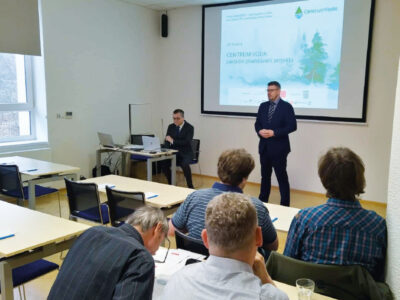
The Fifth Water Centre conference, held on 25 November 2025 at TGM WRI, focused on water management in the Czech Republic under con-ditions of ongoing climate change. The event, organised with the support of the Ministry of the Environment and the Technology Agency of the Czech Republic, presented current research results in the fields of water resources modelling, landscape water retention, water quality, and adaptation to extreme weather events. The conference followed on from previous years, which have long provided a platform for the presentation of research outcomes in water management and for fostering interdisciplinary dialogue between experts from both the academic and applied spheres. It also confirmed the growing importance of interdisciplinary cooperation in addressing environmental challenges and presented a number of practically applicable insights for water management practice.
The growing demand for decentralized renewable energy sources has sparked renewed interest in harnessing the hydropower potential of small watercourses. This paper presents a two-stage methodology developed within the Pico-Hydropower project (TA CR, No. TK04030223), aimed at identifying and evaluating suitable locations for micro-hydropower installations in the Czech Republic. The first stage involves a nationwide spatial assessment of theoretical hydro-power potential (HPP) across all fourth-order catchments, based on a combination of digital elevation models (DMR 5G), interpolated values of mean annual flow (Qa), and calculated average channel head (H). The resulting geodatabase enables prioritization of catchments with above-average potential and serves as input for more detailed analyses.
Protected areas of natural water accumulation have been long monitored and protected. So far, little attention has been paid to the catchment area which will be the future source of water for these water reservoirs from the point of view of influencing their quality. This article focuses on certain diffuse (non-point) processes that may lead to pollution and thus to limited use of accumulated water. It describes the methodology for identifying critical points in the vicinity of the future reservoir, where an excessive amount of sediment loads will enter the aquatic envi-ronment during torrential rainfall events. This will lead to sedimentation of the reservoir as well as to the input of dissolved pollutants. The methodology was applied to all 61 selected sites; the results are clearly presented in Tab. 1 and further discussed. As another non-point aspect, the representation of so-called Nitrate Vulnerable Zones within the reservoir catchment areas is evaluated. Although these areas are assessed in terms of excessive nitrate levels in water, other undesirable compounds used in agriculture may also occur there. As a third aspect, the article describes the status of the land consolidation process in the monitored catchments and discusses their contribution to catchment protection. In conclusion, it is stated that it would be necessary to enshrine into legislation the protection of LAPV catchments, especially for those reservoirs intended for drinking water supply.
In the last quarter of the 18th century, a unique system for timber floating was built in the region of Nové Hrady. Its creation is linked to the name of the then owner of the Nové Hrady Estate, Johann Nepomuk Buquoy, while the project and its implementation were designed and overseen by engineer Johann Franz Riemer. The uniqueness of the system lay in the fact that it allowed the floating of both loose timber (logs) and bound timber (rafts), even on the narrow and low-capacity streams of the Novohradské hory (Gratzen Mountains). The basis of the navigation system was formed by modified (navigable) watercourses, on which there were reservoirs (ponds) ensuring the necessary amount of water for floating timber. The beginnings of the construction of the navigation system date back to the second half of the 1770s. Materials preserved in the archival records of the Nové Hrady Estate provide insight into the beginnings of the waterway construction in 1780–1784. In 1783, the first part of the construction of the navigation system was completed. From that year on, logs were transported to České Budějovice and the first rafts to Prague. In the section to České Budějovice, the waterway included the Pohořský stream, which con-nects to the Černá and Malše rivers. After 1783, the expansion of the navigation system continued to the upper reaches of the Černá river and its tributaries. The navigation system was completed at the turn of the 18th and 19th centuries by making smaller tributaries of the Černá river navigable and with the construction of reservoirs on those streams. The navigation system was maintained and operated until the first half of the 1940s.
How is Czech water management coping with droughts, floods, and new legislative requirements? Mgr. Martin Pták, Director of the Water Protection Department at the Ministry of the Environment, discusses the Ministry’s current priorities, his professional journey, the challenges facing Czech water management, European legislation, and the need for long-term adaptation to climate change. “Our priorities are clear,” he says. “Adaptation, prevention, and cooperation.”
Let us return once more – and for the last time – to Jáchymov, a small town nestled in a deep, forested valley of the Ore Mountains. However, Jáchymov boasts many other remarkable firsts and renowned “bests”. It was here that the world’s first radon spa was founded, centred around the construction of the grand Radium Kurhaus (author’s note: today’s Radium Palace) – once one of the most luxurious hotels in Europe (Fig. 3). The origins of the spa are closely tied to the discoveries of Marie Curie, the first woman to earn a doctorate from the Sorbonne and to receive two Nobel Prizes. In 1520, Jáchymov also became home to the first pharmacy in Bohemia. To this day, the town remains unique worldwide for its use of brachytherapy (“Jáchymov boxes”, BRT), a specialized treatment method found nowhere else. All these remarkable Jáchymov milestones have already been discussed in detail in the April and especially August issues of VTEI this year. So now, let us turn our attention to another local marvel that literally shaped Jáchymov’s history – Svornost Mine. And let us start from the very beginning.
This article presents a comprehensive overview of the evolution of methodological approaches to groundwater balance assessment in Czechoslovakia and the Czech Republic from the 1960s to the present. It outlines the transition from a static evaluation of “exploitable re-serves” toward a dynamic, process-based concept, emphasizing regular comparisons between actual water abstraction and natural groundwa-ter resources. This shift includes the adoption of monthly assessment intervals and quantile characteristics of base flow, aligning with the requirements of both national legislation (especially Act no. 254/2001 Coll., the Water Act) and European directives on water protection.
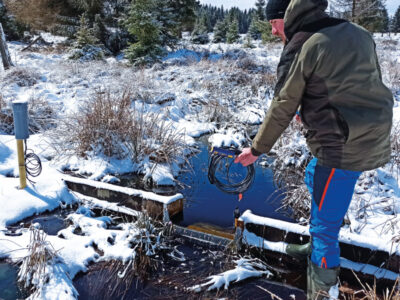
This article focuses on evaluating the concentrations of humic substances (HS) in peatland waters in the Ore Mountains region, specifically in the area near the village of Hora Svatého Šebestiána in the Prameniště Chomutovky nature reserve. The aim was to assess the impact of restoration measures on the occurrence of HS in surface and subsurface waters in a post-peat-extraction environment. Monitoring was carried out from 2022 to 2024 on two experimental sites – one restored (site A) and one predominantly non-restored (site B) – and involved extensive monthly sampling, installation of flow weirs, shallow observation wells, and meteorological stations.
This paper presents the methodological approach and key results of the research project Design of ponds and small reservoirs in terms of the possibility to comply with MPF and flood safety (TA CR, no. SS03010230). The project focused on the assessment of ponds, pond systems and small reservoirs in relation to two hydrological extremes – draught and floods. During periods of drought, the issue of maintaining the minimum residual flow is addressed. The article describes the method of determining and maintaining the minimum residual flow at these hydraulic structures. Furthermore, the article deals with the assessment of the security of these structures in terms of the safe discharge of flood flows in accordance with ČSN 75 2935 – Assessment of the safety of hydraulic structures during floods.
The article presents the results of the project Analysis of Changes in the Water Regime of Land and Watercourses in the Krkonoše National Park Caused by the Network of Roads (TA CR, no. TITSMZP945), implemented as a public procurement commissioned by the Ministry of the Environment of the Czech Republic within the BETA2 applied research programme. The main output of the project is a two‑level typology of the road network in terms of its impact on surface and subsurface runoff. This typology was applied to the territory of Krkonoše National Park (KRNAP) in the Czech Republic and presented in the form of cartographic atlases. The article describes the principles and criteria of the proposed typology and the methodology of its application in map production, which at the basic level combines spatial analyses of road network datasets, digital terrain models and the hydrographic network, and at the detailed level incorporates the results of extensive field surveys. The original analytical procedures include, among other things, the detection of directional and elevation breaks in road segments and the delineation of micro‑catchments for individual sections. The resulting maps provide KRNAP Administration and other managers of protected areas with a tool for identifying road segments with the highest potential impact on the hydrological regime and serve as a basis for planning compensatory measures or restoration interventions.
Have you ever wondered what a hydrologist might discuss at a table with historians, archivists, and chroniclers? Can historical data help us gain a better understanding of today’s flood risk assessment? And might deeper knowledge of past floods prepare us for future ones linked to climate change? We put these questions to Ing. Libor Elleder, Ph.D., in the October hydrology issue of VTEI.
At the T. G. Masaryk Water Research Institute (TGM WRI), two international projects were launched in 2025. These include the SWIM project, funded under the Horizon Europe programme, and the FrauNyLu project, supported by the Interreg cross-border cooperation programme. Both projects also address hydrological topics, which will be managed by the Department of Hydraulics, Hydrology and Hydrogeology.
On 8–9 October 2025, the 21st Magdeburg Seminar on Water Protection will take place in Magdeburg, Germany. This regular international event, held alternately in the Czech Republic and Germany, has, over more than three decades, established itself as an important professional and scientific platform for the exchange of knowledge in the field of water management and water protection in the Elbe Basin.
In August 2025, Ing. Eduard Hanslík, CSc., passed away. He devoted his professional life to the T. G. Masaryk Water Research Institute, where he served for an extraordinary 59 years.
Bathing ponds represent a specific ecosystem where living organisms play a dominant role in maintaining the quality of water in the water body. At the same time, they are very frequently visited, so the biggest source of pollution is from bathers. The aim of this publication is to present and evaluate possible chemical indicators of anthropogenic load – caffeine and urea at four sites (two of which during the entire bath-ing season) in the summer of 2023.
The paper presents an analysis of water quality data from the downstream part of the Czech Elbe and the Vltava for the period 1961–2020 and compares it with archive data (reference period 1880–1913). The transport of nitrogen and total phosphorus within the catchment was compared with the output from wastewater treatment plants (WWTPs).
This article deals with the hydraulic analysis of a flap gate in Doksany and Strakonice based on the evaluation of experimental measurements performed on a physical and mathematic model at the Water Management Experimental Centre, Faculty of Civil Engineering, CTU in Prague.
The article presents a methodology for the spatial delineation of significant urban areas in the Czech Republic, primarily for the purposes of hydrological analyses and flash flood risk assessment. First, the definition of urban areas was refined in relation to existing terminology, followed by the development of a comprehensive procedure for creating layers of urban and natural features using the planimetric layers of the Fundamental Base of Geographic Data of the Czech Republic (ZABAGED®) supported by additional open data sources.
At the beginning of March this year, Petr Birklen became Director General of the state enterprise Povodí Odry. How long was the journey to this position and what does it mean to him? How did he cope with the aftermath of the 2024 floods, and how does he manage to fight against misinformation? And will the long-discussed Nové Heřminovy dam finally be built? Mgr. Petr Birklen answers our questions.
The town of Jáchymov in the Ore Mountains foothills is part of the Karlovy Vary Region and member of the West Bohemian spa family. However, Jáchymov offers a very spe-cific treatment; thanks to the high concentration of radon in the local natural mineral water, the world’s first radon spa was established here and is still operating successfully today.
A wetland is an environment where water is readily available for vegetation, and therefore intensive evapotranspiration (ET) close to the potential ET value occurs. In addition, higher ET intensities can be expected in the future due to the observed increase in temperatures associated with climate change. The impact of wetland ET needs to be considered, for example, in restoration planning or hydrological mod-elling, and it is important to draw on the current knowledge provided by the large number of papers worldwide.
The use of grass strips in agricultural landscapes is widely recognized for their ability to effectively reduce surface runoff and the transport of eroded particles, while simultaneously enhancing biodiversity and landscape stability. This study aimed to quantify the impact of grass strip length on sediment retention in surface runoff. Experimental measurements were conducted on enclosed plots measuring 8 × 1 metres, each with varying proportions of grass cover to simulate different grass strip widths under real-world conditions.
How does Radegast Brewery work with water when brewing beer, what are the brewery’s aims regarding sustainability, to what extent does the brewery use the latest technological trends in its production, and why do we like bitter beer in the Czech Republic? The offer to be inter-viewed for our VTEI journal was accepted by Ing. Mgr. et Mgr. Ivan Tučník from Asahi Europe & International; in the Czech Republic, the company owns Radegast, Plzeňský Prazdroj, Velkopopovický Kozel, and many other breweries across Europe.
Radegast brewery, part of Plzeňský Prazdroj, has started a campaign for water. By 2030, it will retain more water in the Czech landscape than it consumes.
It is with great sorrow that we announce that our colleague and friend Ladislav Kašpárek has passed away.
The article presents the results of the Czech Hydrometeorological Institute (CHMI) obtained when addressing the sub-objectives “Scenarios of future water needs for different climate scenarios and individual sectors of water use” (DC 1.1) and “Identification of areas with deficient water resources” (DC 1.2), which are part of TA CR project No. SS02030027 “Water systems and water management in the Czech Republic in conditions of climate change (Water Centre)” and constitute specific tasks within the work package WP1 focusing on the future of water. The aim of the CHMI was to calculate and analyse how river flows upstream of gauging stations in Czechia are influenced by water use and to determine how this influence may change in relation to climate change.
The article presents partial results of monitoring and modelling in the experimental forest catchments of Suchý, Sokolí, and Slučí streams, the right-handed tributaries of the Černá Opava in the Jeseníky PLA. These results have been generated since 2022 thanks to the NAZV project No. QK22010189 “The impact of deforestation on the water regime of small river basins” with the working title DEFOREST, which also evokes the main goal of the project; to try to capture changes in the dynamics of stands (decay, controlled and spontaneous succession, etc.) and in the runoff regime of these river basins with regard to bark beetle outbreak and the subsequent damage clearing. In all these experimental river basins, monitoring of selected hydrological regime elements (e.g. precipitation on the open area, under-canopy precipitation, volumetric soil moisture, snow gauge sensors) was established, including stationary measurement of water levels in the closing profiles of all three sub-river basins. For modelling of stand changes and hydrological response to these changes, forest stand models (including the self-developed DEFOREST application) and hydrological models HEC-HMS, SIMWE, MIKE SHE and SWAT were used. The extreme flood in September 2024 largely destroyed the water gauging stations and remodelled the watercourse beds, so in 2025 the project team will focus on restoring monitoring.
The article presents the pond landscape development in the Bečvárka river basin based on the interpretation of archival and current maps, including verification of the current state of pond locations. Eleven ponds with a total area of 65.28 ha were recorded on the map of the 2nd Military Mapping. Sixteen ponds with a total area of 76.64 ha were recorded on the current map. The current ponds’ total area is approximately 11 ha larger than the area of the historical ponds. This is despite the fact that almost all individual historical ponds had an area larger than at present. One of the main reasons for this is the later construction of two large ponds in the area. From a comparison of the maps, it is clear that the reduction in the areas of individual historical ponds at present is mainly caused by the overgrowth of the littoral zone.
Assessment of the hydromorphological status and its elements (hydrological regime, continuity, morphological conditions) is part of the monitoring of the ecological status of water bodies. Hydromorphology, as a supporting component of biological assessment, has a significant impact on living organisms in aquatic ecosystems. Based on the Ministry’s request, a new methodology for assessing the hydromorphological status of water bodies category rivers (HYMOS) was developed within the TA CR project. This methodology takes into account new requirements and current knowledge in the field of hydromorphology, while also minimizing the drawbacks of previous methodologies, particularly regarding time and cost efficiency in the assessment process.
Interview with Prof. RNDr. Bohumír Janský, CSc., from the Faculty of Science, Charles University in Prague, about his research on Lake Baikal, Latin America, and Kyrgyzstan.